Guide
What Is Cryptocurrency Mining?
See how crypto mining works, what gear it needs, and how miners earn rewards.
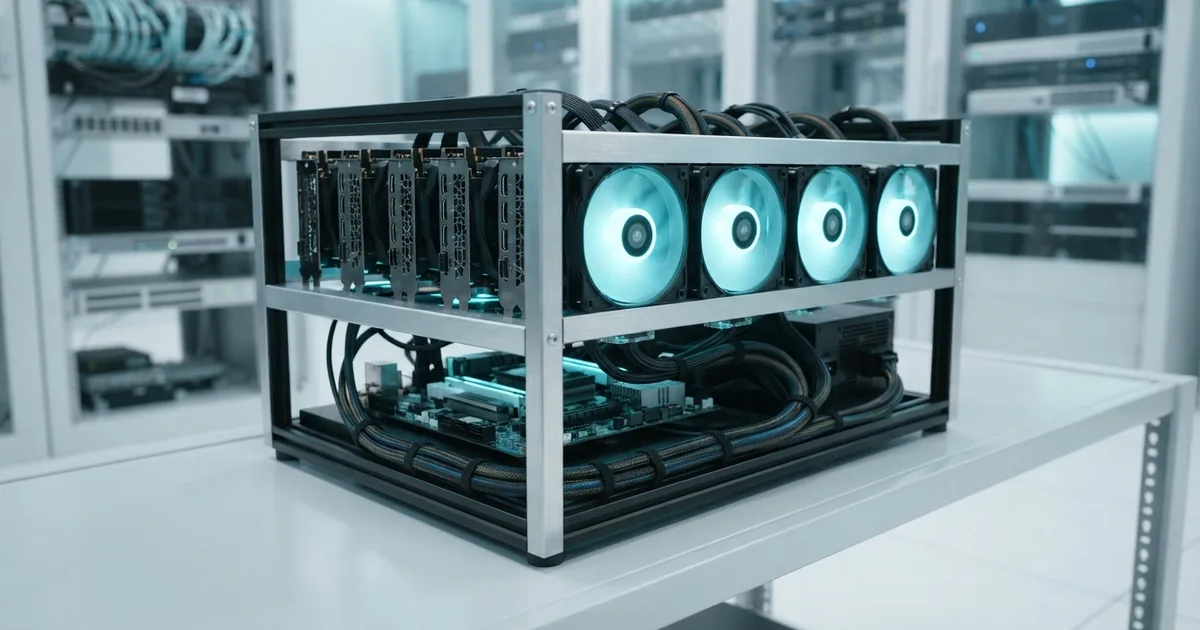
Introduction to Cryptocurrency Mining
Cryptocurrency mining uses computers to check transactions and add valid records to some blockchains. Miners compete to solve a math puzzle, then share a new block with the network. The winner may earn newly issued coins and transaction fees.
That is the short answer to “what is mining cryptocurrency?” It is not digging coins out of a computer. Mining is a way to secure networks that use proof of work, a system where computers show they spent real computing effort.
Mining does not apply to every cryptocurrency. Some networks use other ways to agree on transactions, such as proof of stake. Bitcoin is the best-known proof-of-work network, so its mining process offers a useful example.
Rewards come with costs and risk. A miner must pay for hardware, power, cooling, and upkeep. Earnings can change with coin prices and network competition.
How Does Cryptocurrency Mining Work?
Users send transactions to a network, where they wait in a shared queue. Miners gather eligible transactions into a proposed block. They check that each payment follows the network’s rules, including that funds have not already been spent.
Next, mining hardware tries many number combinations to find a hash that meets the network’s target. A hash is a fixed-length code made from data. Changing even one input gives a different result, so miners cannot predict a winning number.
The number miners change is called a nonce. A miner adds a nonce to the block data, hashes the result, and checks whether it falls below the target. If not, the machine tries another nonce. This repeats billions or trillions of times across the network.
The first miner to find a valid result shares its block. Other nodes check the block and its transactions. If the checks pass, they add it to their copy of the blockchain. Bitcoin’s developer guide to mining explains this process in detail.
Proof of work makes block changes costly. An attacker would need to redo the work and compete with the rest of the network. It does not make fraud impossible, but it raises the cost of rewriting past records.
A hash rate measures how many hash attempts mining hardware can make each second. Higher hash rates improve a miner’s chance of finding a block, but they also use more power. The network adjusts its target over time to keep block creation near its intended pace.
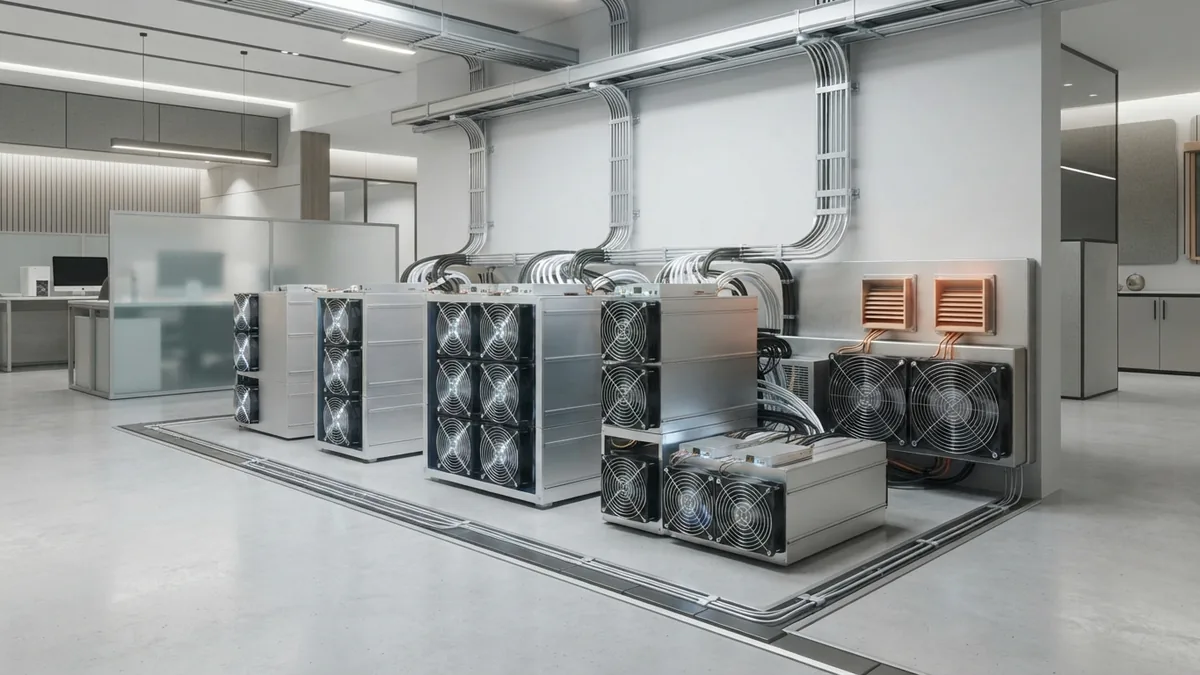
Common Methods of Cryptocurrency Mining
There are three common ways people take part in mining: solo mining, pool mining, and cloud mining. Each method changes who owns the hardware, who bears the costs, and how rewards are shared.
- Solo mining: You run your own hardware and keep the full block reward if you find one. Rewards may be rare, especially when your hash rate is small compared with the network.
- Pool mining: You join other miners and combine computing power. The pool shares rewards among members based on their contributed work, minus any fee.
- Cloud mining: You pay a provider for access to remote mining power. You avoid buying machines, but must trust the provider and review its fees and contract terms.
Cloud mining deserves extra care. A contract may promise a fixed amount of hash power, but it cannot promise a profit. Check the provider’s track record, fees, payout rules, and exit terms before paying.
Mining methods also vary by coin and hardware. Some coins can still be mined with graphics cards, while others favor dedicated machines. Check a coin’s current rules before buying gear.
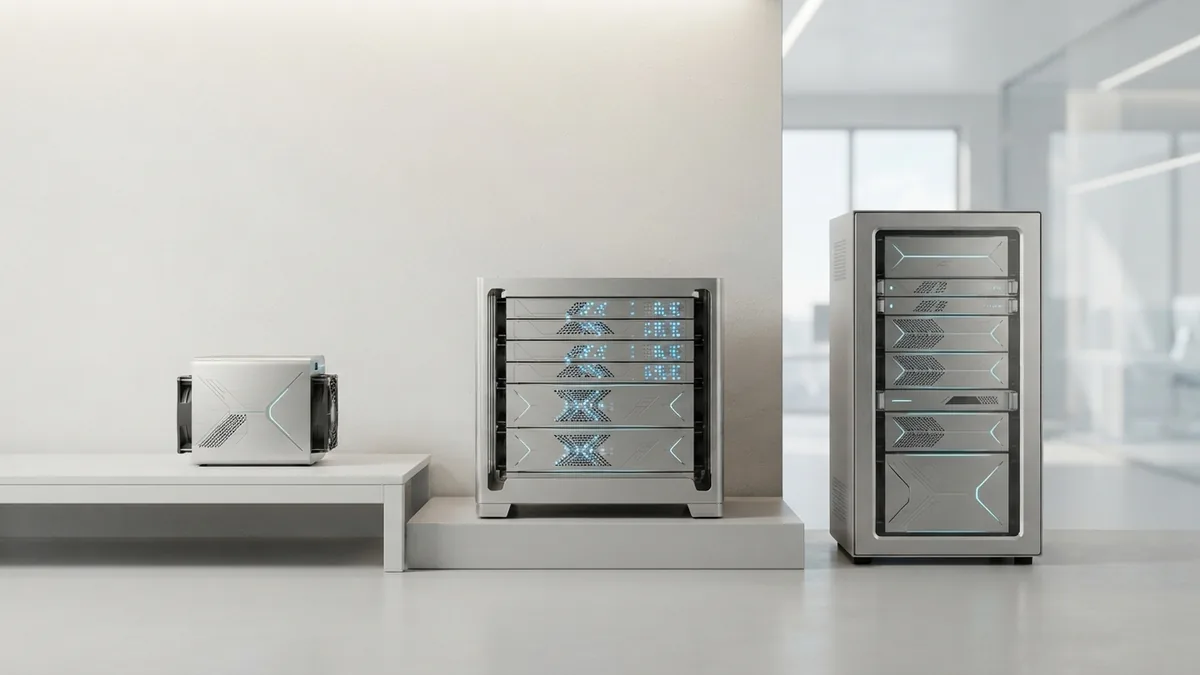
What You Need to Start Mining
Start by choosing a coin and checking whether its mining rewards can cover likely costs. Bitcoin mining usually calls for an ASIC, or application-specific integrated circuit. These machines are built for one kind of task and can outpace general-purpose computers.
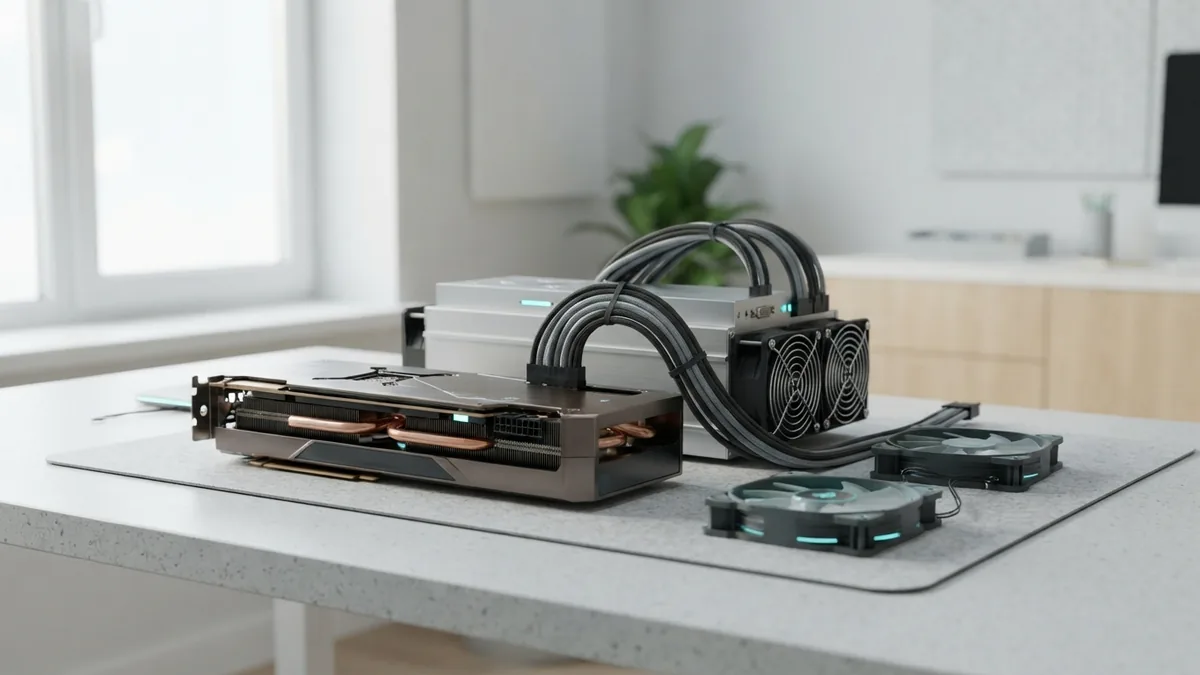
GPUs, or graphics cards, can mine certain other coins. They are more flexible than ASICs, but their returns depend on the coin and current network demand. CPUs, or computer processors, can mine some networks, yet they are rarely competitive on major proof-of-work chains.
Hardware is only one part of the setup. You also need mining software that works with your machine and chosen coin. The software connects your miner to the network or a pool, sends work, and reports results.
Set up a crypto wallet to receive payouts. Keep the recovery phrase private and store a backup in a safe place. A wallet address is used for receiving funds; the recovery phrase can control access to them.
Power and heat affect both cost and reliability. Check the machine’s power draw in watts, then multiply it by your local electricity price. For example, a 1,000-watt miner running all day uses 24 kilowatt-hours daily. At 15 cents per kilowatt-hour, that costs $3.60 per day before cooling or other fees.
Use a well-ventilated space and a safe electrical circuit. Mining machines can run hot and loud, and poor airflow can shorten hardware life. Do not run equipment beyond the circuit’s rated load.
Before you spend, estimate revenue against power, pool fees, hardware cost, and repairs. Online calculators can help, but their results depend on changing coin prices and network difficulty. Treat estimates as a range, not a promise.
Beginners can test the process with a small setup before scaling up. Learn how to install the software, set a payout address, watch temperatures, and read pool reports. Keep records of power use and payouts so you can judge the real cost.
Why Hashes and Nonces Matter
Hashing turns block data into a short digital fingerprint. Miners cannot choose the output directly. Instead, they change parts of the block and keep hashing until the output meets the target.
The nonce is one field miners can change. When miners use up the available nonce values, they can alter other data, such as a field linked to transaction details. This gives the machine more possible inputs to test.
There is no shortcut that guarantees a winning hash. A higher hash rate means more attempts per second, not a promise of success. The chance of finding a block also depends on the miner’s share of the network’s total hash rate.
These checks let other nodes verify a proposed block quickly. They do not need to repeat every failed attempt. They only need to hash the submitted block once and confirm its result meets the target.

Mining Pools or Solo Mining?
Solo mining can pay the full reward, but a small miner may wait a long time between wins. In a pool, many miners work on the same block search. The pool then shares payments according to its payout plan.
Pool payouts are usually lower per miner but arrive more often. A pool may charge a fee, set a minimum payout, or use a method that shifts some risk to members. Read its rules before connecting your machine.
For example, imagine a small miner has a tiny share of the network’s total hash rate. Solo mining may bring long stretches with no payout. Pool mining can turn that uncertain block reward into smaller, more regular payments.
Compare pool fees, payout limits, uptime, and location. A nearby pool may reduce connection delays, though it does not change the underlying odds by much. Keep a backup pool address in your software settings if the main pool goes offline.
Choose solo mining when you value control and can accept uncertain rewards. Choose a pool when you prefer steadier payouts and understand its fees. Neither choice guarantees profit.
The Future and Limits of Cryptocurrency Mining
Mining changes as networks grow and hardware improves. A rise in competition can reduce each miner’s share of block rewards. Coin prices, power costs, and network rules can also change the value of mining.
Energy use is a key concern because proof of work relies on ongoing computation. Miners may seek low-cost power or use machines when power supply is available. Still, cheap electricity does not remove risks such as heat, noise, hardware wear, or falling coin prices.
Mining can help secure a blockchain and confirm payments, but it is not a simple way to earn money. Start with the network’s rules, learn the hardware and software, and work out costs before buying equipment. A clear budget matters more than a high hash rate.
Frequently asked questions
What is cryptocurrency mining?
Cryptocurrency mining uses computing power to check transactions and add blocks to some blockchains. Miners may earn coins and fees for valid work.
How does cryptocurrency mining work?
Mining machines repeatedly hash block data while changing a nonce. The first miner to find a hash below the network target can share a block for review.
What hardware do I need to mine cryptocurrency?
The right hardware depends on the coin. Bitcoin mining generally uses ASIC machines, while some other coins support GPUs or CPUs.
Is pool mining better than solo mining?
Pool mining often gives smaller but more regular payouts because members share rewards. Solo mining keeps the full reward if you find a block, but wins may be rare.
Can cryptocurrency mining make a profit?
It can, but profit is not assured. Power prices, hardware cost, fees, network competition, and coin prices all affect returns.